
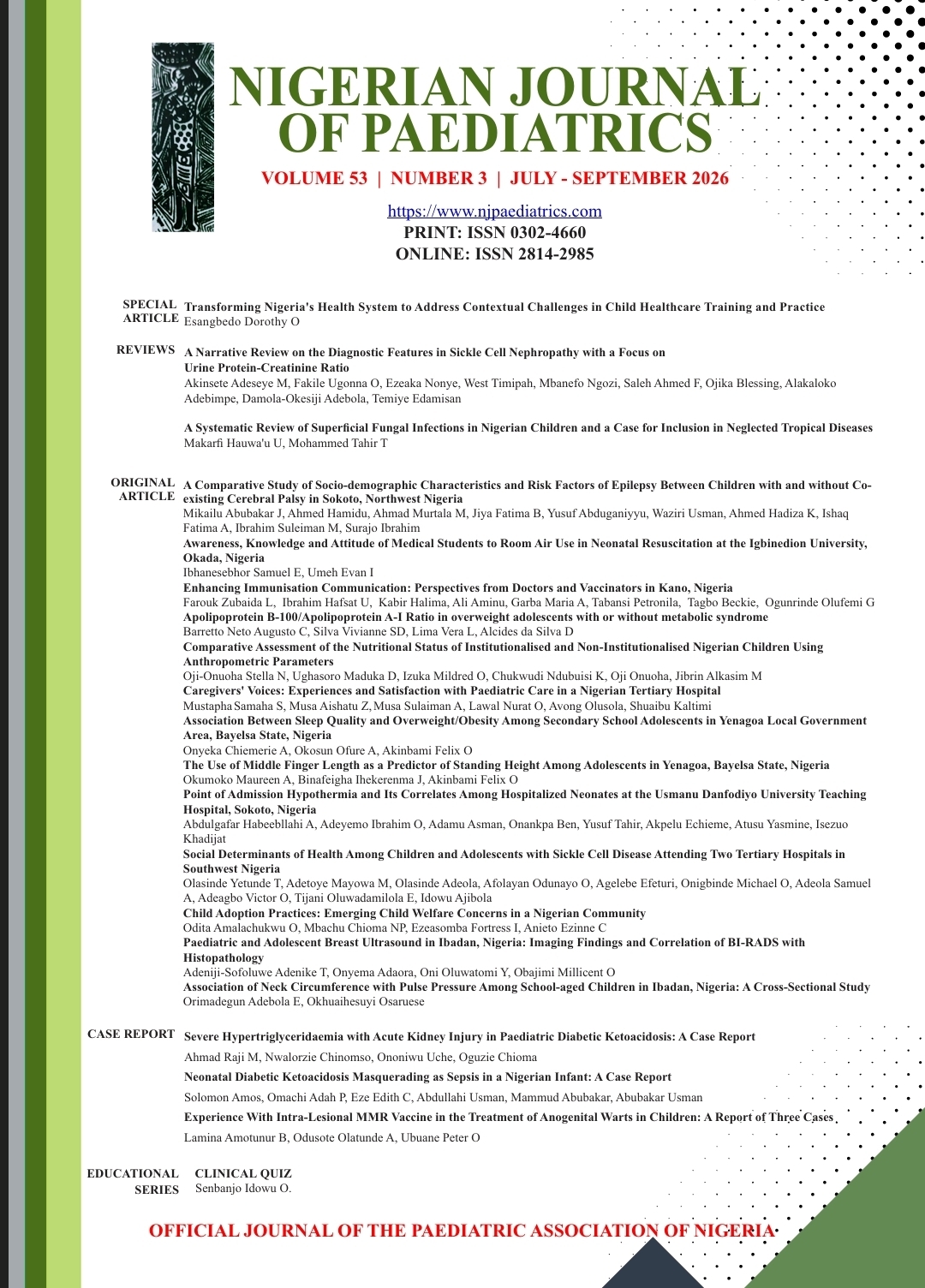
Apolipoprotein B-100/Apolipoprotein A-I Ratio in Overweight Brazilian Adolescents with or without Metabolic Syndrome
DOI:
https://doi.org/10.63270/njp.v53i3.2000076Keywords:
Adolescents, APOA-I, APOB-100, Cardiometabolic risk, Hypertriglyceridaemia, Insulin resistanceAbstract
Background: Metabolic syndrome is defined as the presence of at least three cardiometabolic risk factors: abdominal obesity, hyperglycaemia or diabetes mellitus, dyslipidaemia, and hypertension, all of which are associated with insulin resistance.
Objectives: To investigate the association between the ratio of APOB-100/APOA-I and metabolic syndrome in Brazilian overweight adolescents.
Methods: A cross-sectional study of 2866 students aged 10-19 years, of both sexes, was conducted in 2011. They were randomly selected from public and private schools in Vitória de Santo Antão, Pernambuco. Metabolic syndrome was defined according to the criteria of the National Cholesterol Education Program Adult Treatment Panel III (NCEP/ATP-III) and the International Diabetes Federation (IDF).
Results: The prevalence of metabolic syndrome was 14.5% (95% CI: 10.4–19.5) and 18.5% (95% CI: 14- 29) according to the IDF and NCEP-ATP III criteria, respectively. The median APOB-100/APOA-I ratio was significantly higher (p < 0.005) among adolescents with hypertriglyceridaemia, low HDL-c, hyperglycaemia, abdominal obesity, hypertension, insulin resistance, and components of metabolic syndrome. The Poisson regression analysis showed that, as independent predictors, a high APOB-100/APOA-I ratio, low HDL-c (PR = 1.77, 95% CI 1.2–2.6), and elevated serum LDL-c level (PR = 3.3, 95% CI 2.4–4.5) were present.
Conclusion: The ratio of APOB-100/APOA-I showed a significant association with components of metabolic syndrome in Brazilian adolescents. Given the importance of the apolipoprotein B-100/A-I ratio as a marker of cardiometabolic risk, it should be included in routine clinical practice.
Downloads
Published
Data Availability Statement
Data Availability Statement
All data supporting the findings of this study are included within the article.
Issue
Section
License
Copyright (c) 2026 NIGERIAN JOURNAL OF PAEDIATRICS

This work is licensed under a Creative Commons Attribution 4.0 International License.
This is an open-access journal, and articles are distributed under the terms of the Creative Commons Attribution 4.0 License, which allows others to remix, transform, and build upon the work even, commercially, as long as appropriate credit is given to the author, and the new creations are licensed under identical terms
