
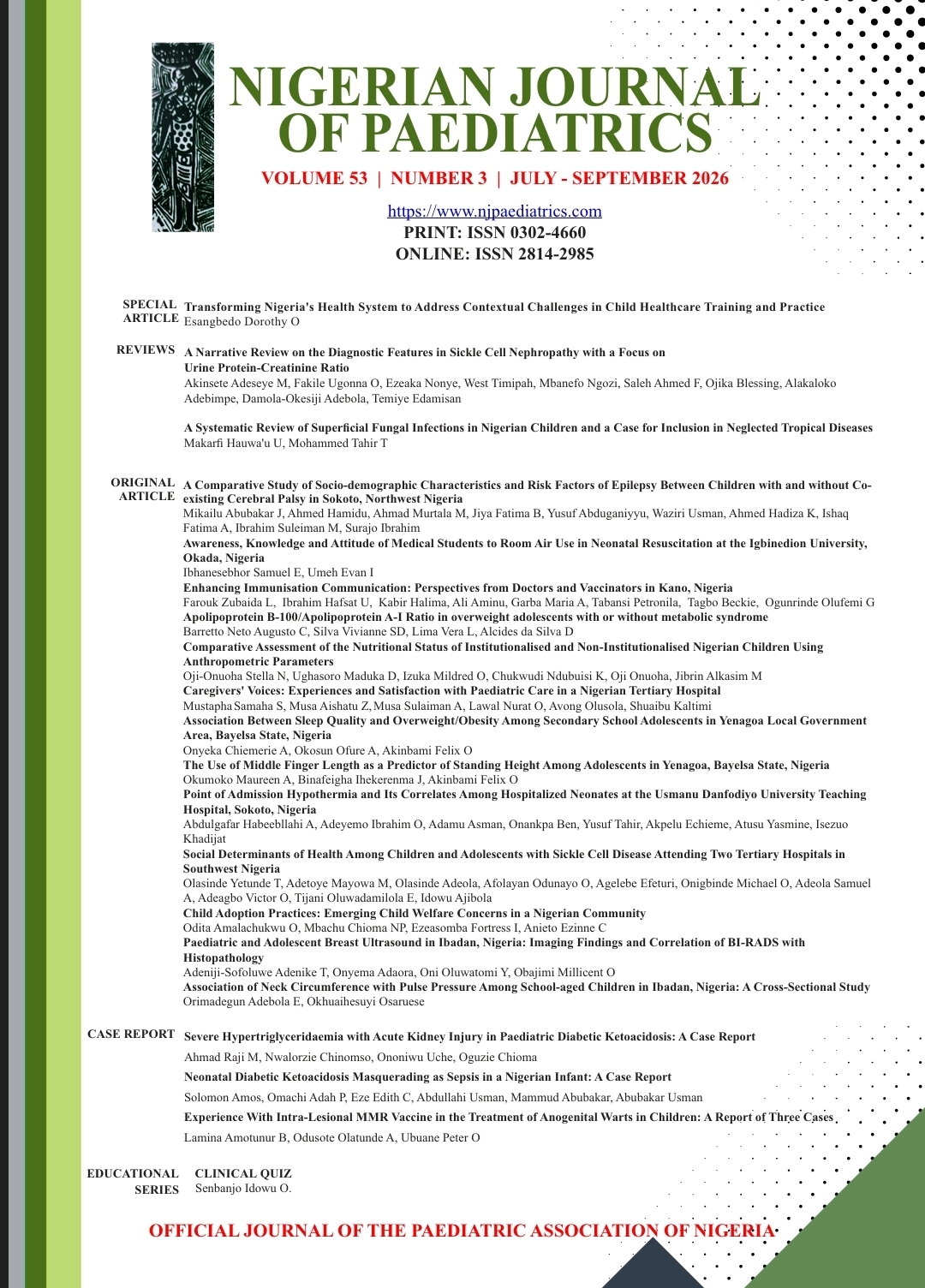
Neonatal Diabetes Mellitus Masquerading as Sepsis in a Nigerian Infant: A Case Report
DOI:
https://doi.org/10.63270/njp.v53i3.2000087Abstract
Neonatal diabetes mellitus (NDM) is a rare monogenic disorder presenting within the first six months of life. It is frequently under-recognised in low-resource settings due to its clinical overlap with severe sepsis. We report an 11-week-old Nigerian infant who presented with fever, respiratory distress, convulsions, severe dehydration, and altered consciousness, and was initially managed as severe bronchopneumonia with sepsis. Subsequent evaluation revealed marked hyperglycaemia (random blood glucose >33.5 mmol/L), metabolic acidosis (serum bicarbonate 11 mmol/L), and ketonuria, confirming diabetic ketoacidosis (DKA). The persistence and severity of hyperglycaemia beyond expected stress responses raised suspicion of an underlying metabolic disorder. The patient was managed with intravenous fluids, insulin therapy, and antibiotics, followed by careful metabolic stabilisation, after which a structured transition from insulin to oral glibenclamide was undertaken, resulting in sustained glycaemic control. In the absence of genetic testing, the favourable clinical and biochemical response to sulfonylurea therapy provided functional support for the diagnosis of NDM. The child has remained stable on follow-up care for two years. This case highlights the diagnostic challenge posed by the overlap between sepsis and metabolic disorders in early infancy and underscores the importance of routine glucose assessment in critically ill infants.
Downloads
Published
Data Availability Statement
The data supporting the findings of this case report are available from the corresponding author upon reasonable request. Relevant clinical information has been de-identified to ensure patient confidentiality.
Issue
Section
License
Copyright (c) 2026 NIGERIAN JOURNAL OF PAEDIATRICS

This work is licensed under a Creative Commons Attribution 4.0 International License.
This is an open-access journal, and articles are distributed under the terms of the Creative Commons Attribution 4.0 License, which allows others to remix, transform, and build upon the work even, commercially, as long as appropriate credit is given to the author, and the new creations are licensed under identical terms
