
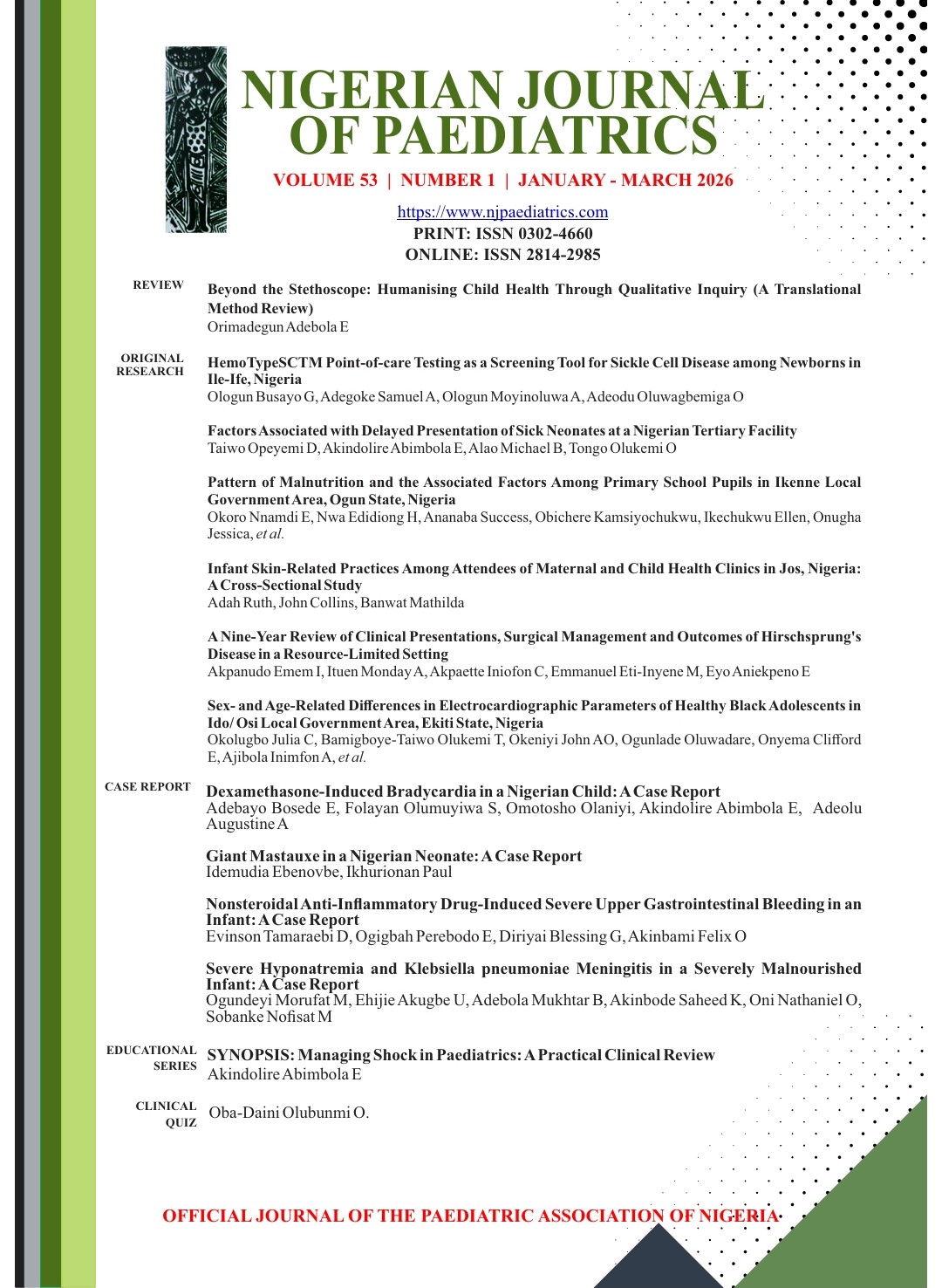
Infant Skin-Related Practices Among Attendees of Maternal and Child Health Clinics in Jos, Nigeria: A Cross-Sectional Study
DOI:
https://doi.org/10.63270/njp.v53i1.2000047Keywords:
Neonate, Skin-to-skin, delayed bathing, vernix-caseosa, skin care educationAbstract
Background: Evidence-based skin-related practices such as delayed bathing, skin-to-skin contact (SSC), and maternal skin care education are recommended to improve neonatal outcomes.
Objective: To assess infant skin-related practices among attendees of Maternal and Child Health (MCH) Clinics and identify gaps relative to global recommendations.
Methods: A facility-based, cross-sectional study was conducted among 255 mothers of infants attending nine public and private health facilities in Jos North Local Government Area (LGA). A semi-structured interviewer-administered questionnaire was used to collect data on sociodemographic characteristics and infant skin-related practices across antenatal, delivery, and postnatal contacts.
Results: Essential infant skin practices were often missed during facility contacts. Only 36.5% of mothers received instruction on infant bathing, 37.3% practiced SSC after delivery, and only 9.4% reported infant skin checks during postnatal visits. Inappropriate practices, such as bathing within 24 hours of life, were common, especially in public primary health centres (73.7%), while removing vernix caseosa was nearly universal (94.4%). Grandmothers were the main influencers of infant skincare practices, surpassing health workers (38% vs 22.7%) except in public tertiary hospitals, where health workers predominated.
Conclusion: Infant skin care practices in Jos remain suboptimal and inconsistent with international guidelines. Integrating evidence-based skin care education into routine maternal-child health services and strengthening health workers' capacity about skin-related practices are crucial to improving neonatal outcomes.
Downloads
Published
Data Availability Statement
All data is included in the result section of the manuscript
Issue
Section
License
Copyright (c) 2026 NIGERIAN JOURNAL OF PAEDIATRICS

This work is licensed under a Creative Commons Attribution 4.0 International License.
This is an open-access journal, and articles are distributed under the terms of the Creative Commons Attribution 4.0 License, which allows others to remix, transform, and build upon the work even, commercially, as long as appropriate credit is given to the author, and the new creations are licensed under identical terms
